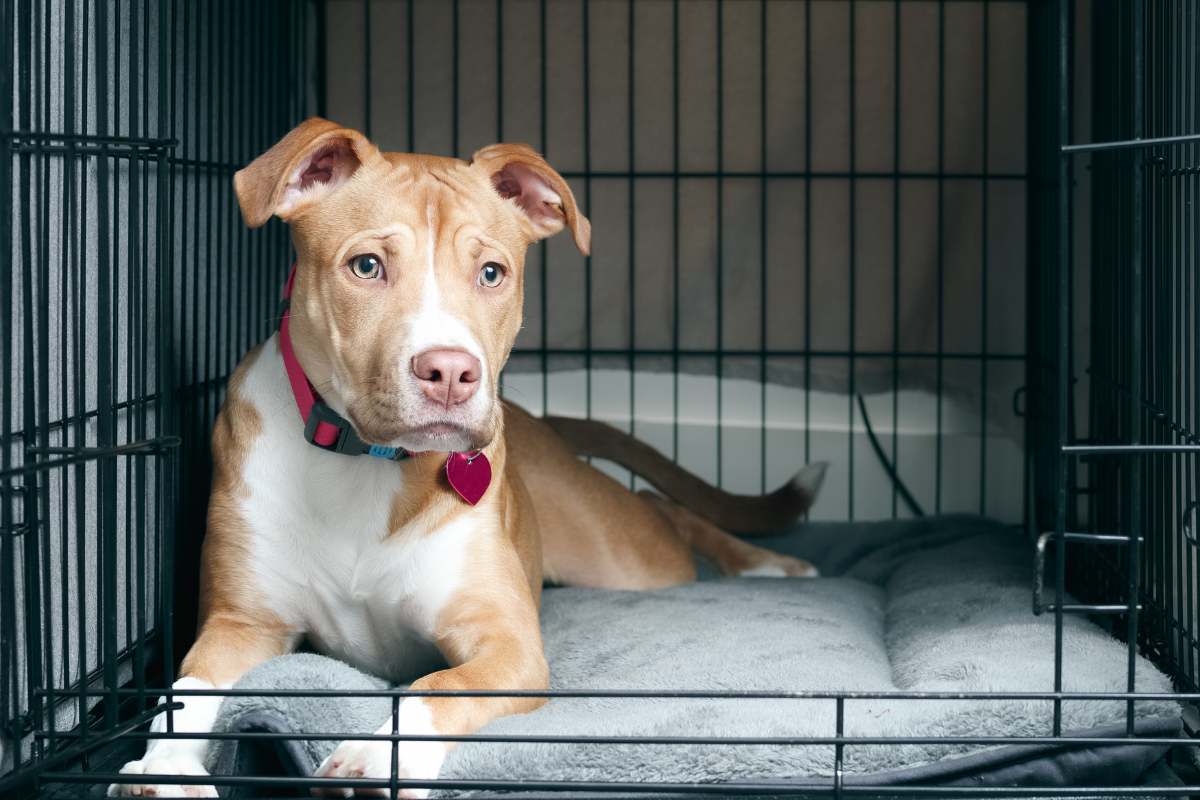
Young puppies are very smart inquisitive creatures, and they are constantly learning. Before your puppy can be trusted to have full run of the house or yard unattended they must be taught appropriate puppy protocol. If left unfettered too soon your puppy will quickly become a total tyrant. Anytime you are physically or mentally unavailable, your puppy should be placed in a long or short term confinement area.
Confinement Training Tips
- For your puppy’s short term confinement use a plastic crate instead of a wire one. Dogs in the wild are den animals; they will seek out small enclosed cozy areas to settle. You may have already noticed that your puppy will curl up under your bed, couch, or coffee table. Wire crates often make puppies feel imprisoned rather than comfortable and cozy.
- Make sure your plastic crate is not too large. Your puppy may learn to use one end as a toilet, and the other end as living quarters.
- Feed your puppy in the crate—Feeding your puppy in the crate will greatly improve his attitude towards his short term confinement. The crate is a great place to put your puppy’s Kong® stuffed with food (see Kong® stuffing handout), or other favorite chew toys. In the wild a puppy’s den is the place where they eat and sleep. If instead your puppy is only put in his crate when you leave, he will develop anxiety over being in his crate rather than learn to settle and feel comfortable.
- For your puppy’s long term confinement use an Ex-pen (or small bathroom) with a “pup-O-potty” if you will be gone for periods longer than your puppy can go without eliminating. A pup-O-potty is a plastic or wooden frame with a piece of carpet grass placed inside, so that your puppy may develop a preference for grass even in your absence.
- Never use the crate as a punishment—The crate should be a safe zone, where bad things don’t tend to happen. If your puppy is causing trouble you may use the crate to confine him, and protect him against himself, however do not let your puppy believe you are angry when you put him in his crate.
- Be consistent—Don’t be tempted to leave your puppy out of his long and short term confinement areas on weekends or days when you are home all day. Puppies need consistency, especially in the area of confinement training, to maintain a positive cooperative attitude. To avoid anxiety over confinement you must use confinement in your presence as well as your absence.
Leave a Reply